SLT 2026
Multimodal speech processing and controllable generation for healthcare and accessibility
Ph.D. Candidate, Language Technologies Institute

(she/her)
Ph.D. Candidate, Language Technologies Institute
I am a Ph.D. candidate at the Language Technologies Institute, Carnegie Mellon University, where I am a member of the Multimodal Speech Processing (MSP) Lab led by Prof. Carlos Busso. My research sits at the intersection of multimodal speech processing and controllable generation: I model atypical speech and speech-grounded facial dynamics, and use generative models to make speech and facial technologies work for the people they most often fail, including children with speech disorders, individuals with craniofacial anomalies, and second-language learners.
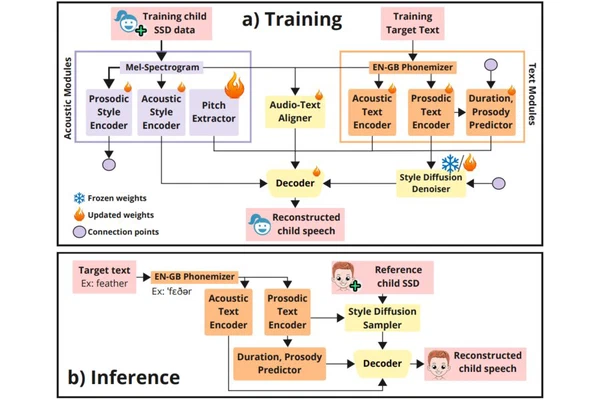
My work spans generative reconstruction of disordered speech, synthetic data for low-resource clinical ASR, anatomically consistent facial analysis and synthesis, and interpretable multimodal biomarkers of speech disorders. In summer 2026 I interned with the Apple Accessibility team in Seattle, working on atypical speech generation.
My Ph.D. research is developed in collaboration with Children’s Health Dallas and UT Southwestern Medical Center, with Dr. Rami Hallac, Director of Research at the Analytical Imaging and Modeling (AIM) Center at Children’s Medical Center and Associate Professor at UT Southwestern. I communicate my work to both the AI and the medical communities: beyond AI venues such as ICMI and Interspeech, I have presented at clinical meetings, including the American Cleft Palate–Craniofacial Association annual meeting (ACPA 2024) and the International Congress on Cleft Lip/Palate (CLEFT 2025), and published in The Cleft Palate Craniofacial Journal.
Ph.D. in Language and Information Technology
2023 – Expected Summer 2027
Carnegie Mellon University
Master of Language Technologies (M.L.T.)
2025 – Expected Summer 2027
Carnegie Mellon University
M.S. in Electrical Engineering
2020 – 2022
University of Campinas (UNICAMP), Brazil
B.S. in Electronics and Telecommunications Engineering
2014 – 2019
Universidad de las Fuerzas Armadas ESPE, Ecuador
Ph.D. in Language and Information Technology
2023 – Expected Summer 2027
Carnegie Mellon University
Transferred from The University of Texas at Dallas
Advisor: Prof. Carlos Busso
Master of Language Technologies (M.L.T.)
2025 – Expected Summer 2027
Carnegie Mellon University
Earned en route to the Ph.D.
Language Technologies Institute
M.S. in Electrical Engineering
2020 – 2022
University of Campinas (UNICAMP), Brazil
FAPESP Research Excellence Fellowship
Advisor: Prof. Bruno S. Masiero
B.S. in Electronics and Telecommunications Engineering
2014 – 2019
Universidad de las Fuerzas Armadas ESPE, Ecuador
Best Graduate Award
Advisor: Prof. Felipe Grijalva
I am looking for full-time research positions starting in Fall 2027. If my profile looks like a good fit, please reach out at kroseroj at cmu dot edu or karenrosero14 at gmail dot com.
Clinicians assess speech by listening, watching the face, and reasoning about how sounds are produced, yet most AI tools analyze audio alone and are trained mostly on adults with typical speech. I develop AI tools that analyze speech production the way clinicians observe it, for cleft lip and palate, speech sound disorders in children, and dysarthria.
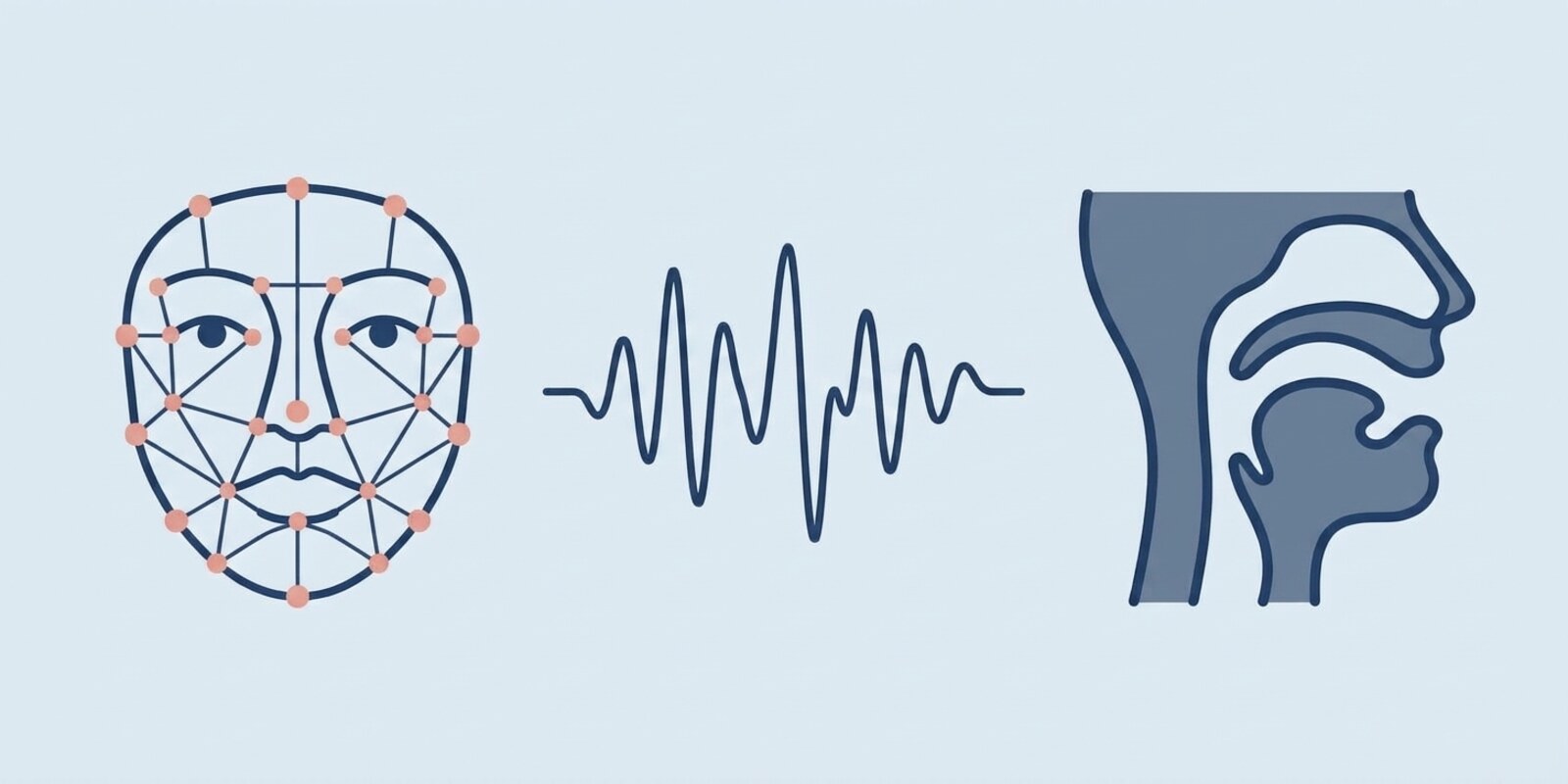
Combining speech, facial video, and articulatory information, with cues tailored to each condition: anatomy-aware landmarks and lip assessment after cleft repair, automatic consonant accuracy for children’s speech that correlates with expert annotation (ρ = 0.63), and dysarthria severity from speech, the intended transcript, and facial asymmetry.
Clinical data are scarce and identify the patient. I adapt models pretrained on typical data to new populations using little real data: synthetic disordered speech that reduces the data needed to train speech recognition for children, text-guided synthesis of cleft lip images, and anonymization that keeps the clinically relevant anatomy (98.9% of anonymized faces identified as different people).
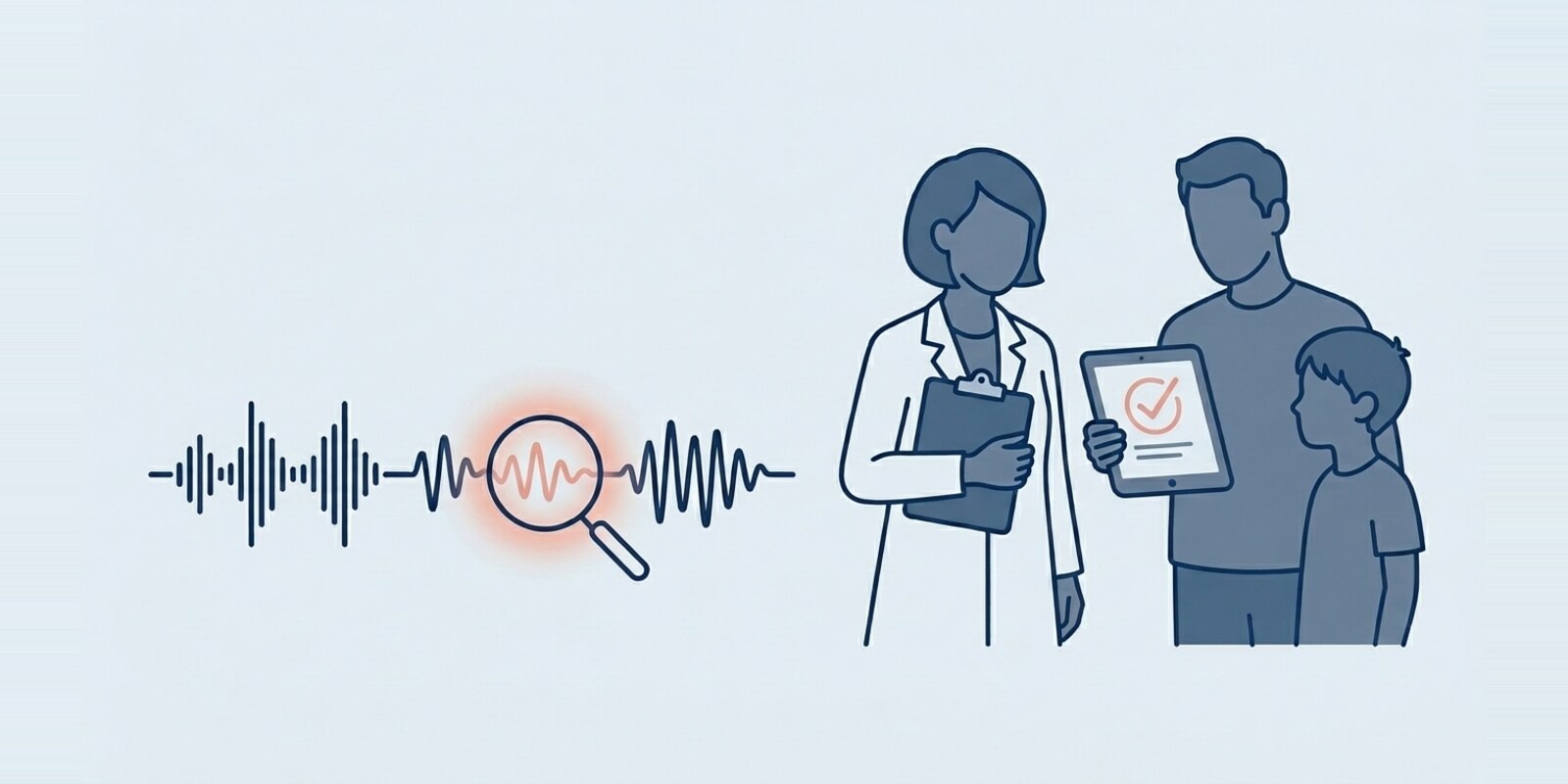
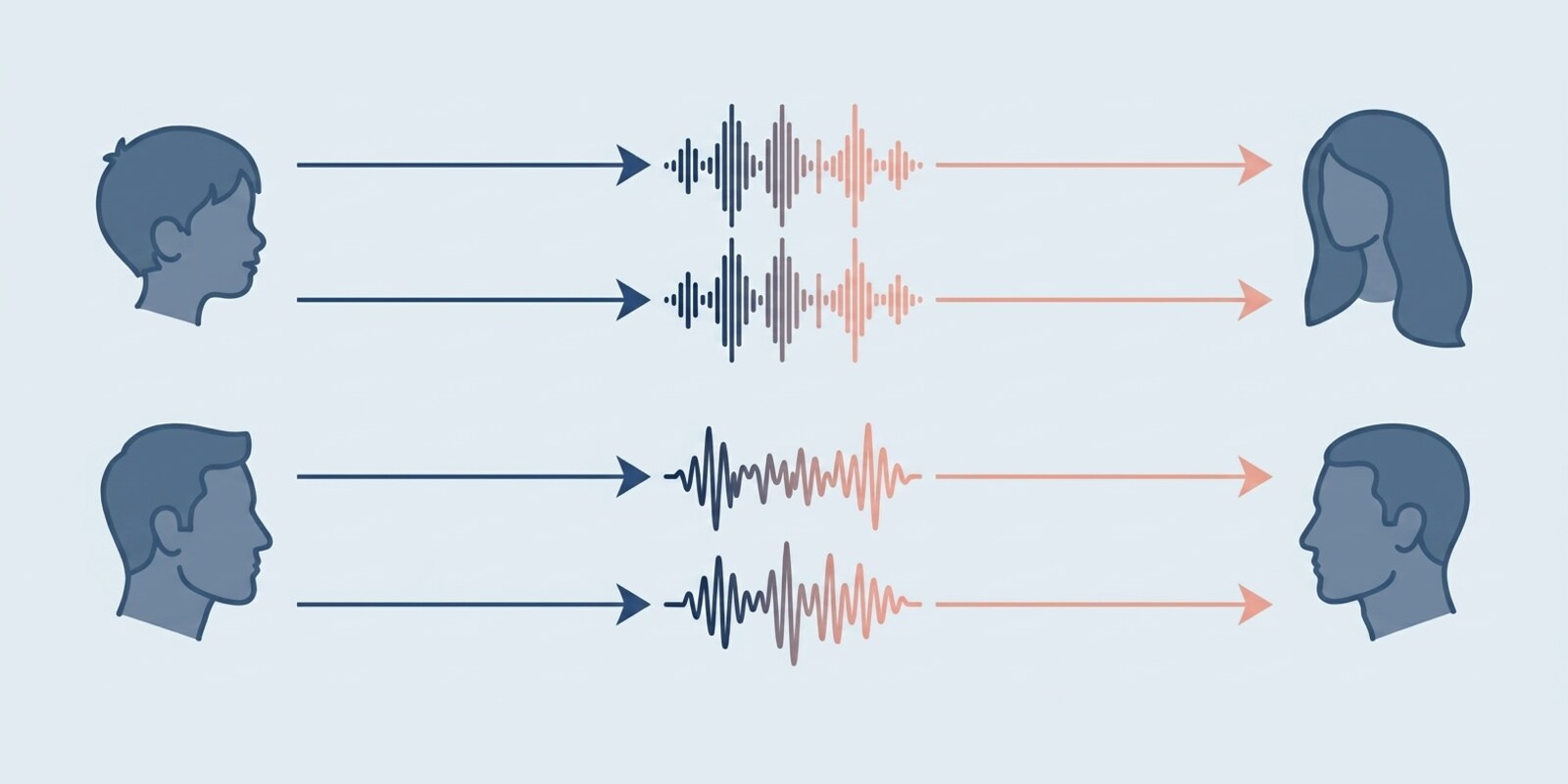
Assessments that report what differs and where, by comparing an atypical production with a typical reference from the same person, such as the child’s intended utterance in their own voice or a normalized version of the same face. Next: feedback for home practice, and voice technology that works for speakers with speech disorders.
Open-source releases accompanying my papers
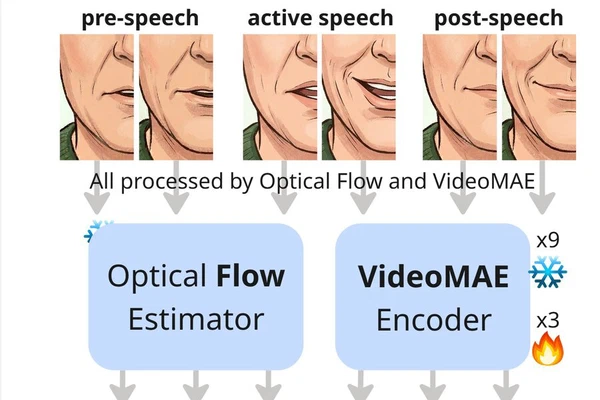
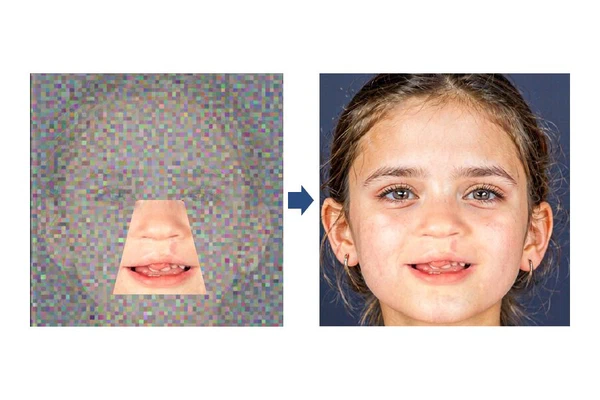
Privacy protection for clinical photos of patients with cleft lip. A diffusion model synthesizes a new face around the patient’s preserved orofacial region.
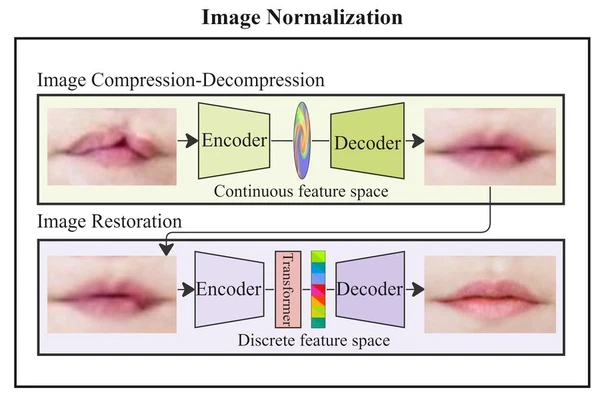
Lip normalization and Siamese abnormality detection for patients with repaired cleft lip and palate, trained without patient data.
The full list is available on Google Scholar and on the publications page.